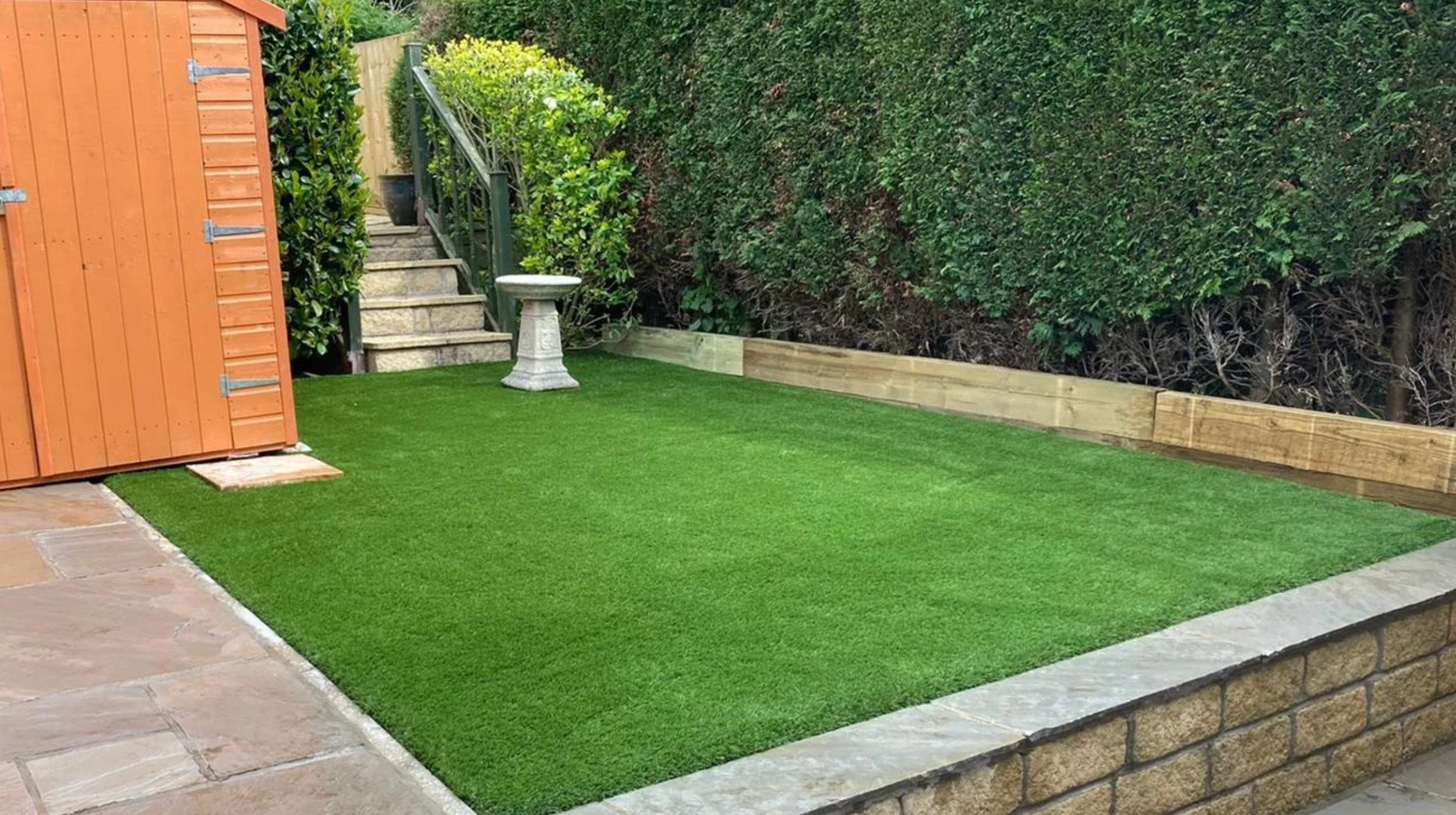
Artificial Grass Installation: Building the Right Foundation
Artificial grass installation relies on proper ground preparation. Follow these key steps with a hardcore sub-base, granite dust and weed membrane for a durable lawn.
Artificial grass installation can transform your garden. A great finish depends on more than the turf itself. The secret to a long-lasting, level and durable lawn lies in the preparation underneath. Use a solid hardcore sub-base, a layer of granite dust and a suitable weed membrane. These layers create the ideal foundation. This guide walks through the key stages of artificial grass installation and explains why each layer matters.
Step 1: Preparing the Ground
Start any artificial grass installation by preparing the existing ground properly. Remove the old grass, weeds, roots and other unwanted materials. This creates a clean working area. Then excavate the ground to the required depth. Leave enough space for the sub-base, granite dust and artificial grass. Aim for the correct finished height. Good ground preparation is essential. Rushing this stage can lead to an uneven surface. It can also cause sinking or dips in the lawn over time.
Step 2: Installing the Hardcore Sub-Base
Once you excavate the ground, install a suitable hardcore sub-base. This provides the main structural support for the artificial lawn. It creates a stable foundation. Spread the hardcore evenly across the area. Compact it thoroughly with a plate compactor. Proper compaction reduces movement. It creates a firm base for the layers above. The depth of the hardcore depends on ground conditions, intended use and drainage needs. Softer or poorly drained ground may need extra preparation. Install and compact this layer correctly. The finished lawn stays stable and performs well for years.
Step 3: Applying the Granite Dust
With the hardcore in place, add a layer of granite dust. This creates a smooth, even surface. Granite dust helps with fine levelling. It fills smaller gaps in the compacted sub-base. Spread it, then level and compact carefully. Achieve a consistent finish across the area. This stage matters because imperfections can show through the artificial grass. Create a firm, even surface. Avoid loose material or noticeable hollows. Grade the base properly so water drains away. Do not create areas where water collects.
Step 4: Laying the Weed Membrane
After you prepare the base, install a suitable weed membrane. The membrane suppresses weed growth from below. It adds a separation layer in the installation. Lay it flat. Use overlaps and fixings that suit the product. Choose a membrane suitable for artificial grass installations. Make sure it does not restrict drainage. A weed membrane reduces unwanted growth. It cannot guarantee a completely weed-free lawn. Wind-blown seeds can still grow in surface debris or around the edges.
Step 5: Laying the Artificial Grass
Once the base and membrane are ready, install the artificial grass. Roll out the grass carefully and position it. Allow the material to settle before final trimming. Align each section so the pile faces the same direction. This creates a consistent appearance. Where you need multiple pieces, prepare and secure the joins. Use suitable joining tape and adhesive for artificial grass. Trim the edges neatly to fit the garden shape, borders and features. Use appropriate fixings to secure the perimeter. This helps prevent movement. Attention to detail here creates a professional-looking finish.
Step 6: Brushing and Finishing Touches
After you secure the grass, brush the pile upright. Use a suitable stiff brush or power brush. Apply kiln-dried sand infill if the manufacturer recommends it. This supports the grass fibres. It improves the finished appearance and adds stability. Check the edges, joins and surrounding areas. Ensure everything is secure, tidy and ready to use. The result is a fresh, green lawn. It looks great all year without regular mowing, watering or treatments for natural grass.
Artificial Grass Installation – Why the Right Base Matters
A high-quality artificial lawn installation starts beneath the surface. Use compacted hardcore, a levelled granite dust layer and an appropriate weed membrane. These create a stable, attractive finish when you select and install the materials correctly.
Each component serves a purpose:
- Hardcore provides structural support and a stable foundation.
- Granite dust creates a smooth, level finishing layer.
- Weed membrane suppresses weeds from below and allows water to pass.
- Artificial grass provides the finished green surface with minimal routine maintenance.
Consider drainage throughout. Water needs a route through the underlying layers into the ground or a drainage system.
How to Maintain Your New Artificial Lawn
Artificial grass is easy to maintain. Keep your lawn looking its best with these steps:
- Brush the grass periodically to keep the fibres upright.
- Remove leaves and garden debris before they build up.
- Rinse away dirt or spills when necessary. Follow the manufacturer’s care guidance.
- Check the perimeter and joins occasionally for signs of movement.
- Remove any weeds that appear around the edges or in surface debris.
Artificial Grass Installation
With the right installation and a little routine care, artificial grass remains an attractive garden feature for many years. Artificial grass installation involves more than laying synthetic turf. Careful excavation, a well-compacted hardcore sub-base, accurately levelled granite dust and a suitable weed membrane all improve the finished lawn. Focus on the groundwork as well as the grass. You create a neat, durable and low-maintenance outdoor space to enjoy through the seasons.
Thinking about upgrading your garden? Investing in proper ground preparation helps achieve a professional finish.
- By: Admin WYAL
- Uncategorised
- No Comments
Latex vs PU vs K9 Turf Premier: Why Backing Matters for Dogs
Artificial grass has become increasingly popular with dog owners. They want a lawn that stays green all year without mud, worn patches or heavy maintenance. When dogs regularly use the lawn as a toilet area, one part of the product needs particular attention: the backing.
Traditional artificial grass usually comes with either a latex backing or a polyurethane (PU) backing that has drainage holes. K9 Turf Premier takes a different approach. It uses a fully knitted backing designed to let liquids drain through the turf.
So what is the difference between latex and PU artificial grass and K9 Turf Premier? And why does the backing matter so much when you have dogs?
Why Does Artificial Grass Backing Matter?
When a dog urinates on artificial grass, the liquid needs somewhere to go. With a conventional artificial lawn, urine travels through the grass fibres before it reaches the backing. If the backing is largely solid, the liquid has to find individual drainage holes before it can pass into the sub-base.
K9 Turf explains that urine can remain on the solid sections of conventional PU and latex products between the drainage holes. Its Premier product instead uses a knitted structure that allows moisture to pass through the backing across the whole surface.
This difference becomes increasingly important when dogs use the same area every day.
Latex-Backed Artificial Grass
Latex has traditionally been one of the most common backing materials in artificial grass. For a general garden that dogs do not regularly use as a toilet, a latex-backed lawn can provide a practical and economical solution.
The situation changes when the lawn becomes a dedicated dog toilet area. Latex-backed artificial grass relies on drainage holes, so urine does not necessarily leave the turf immediately. Urine soaks into the latex backing and can contribute to persistent odours over time.
Potential issues with latex-backed grass
Dog owners should consider these points:
- Drainage occurs through specific holes rather than the entire backing
- Urine can remain within or around the backing
- Regular cleaning becomes more important
- Odour can develop if urine residues accumulate
- Suitable drainage beneath the artificial grass is essential
If one or several dogs will use the lawn frequently, consider the drainage characteristics of the backing before installation.
PU-Backed Artificial Grass
Polyurethane (PU) is another backing material used in artificial grass. PU-backed turf can offer advantages for conventional landscaping and is often promoted as an alternative to latex. However, a PU-backed product with drainage holes still shares a key characteristic with conventional latex-backed grass: the backing is predominantly solid, and liquid passes through designated holes.
K9 Turf describes this type of PU backing as allowing water to drain through the punched holes, while liquid can remain on the solid areas between them.
For a normal ornamental lawn, this may not be a major concern. For a lawn that functions as a dog’s toilet, the difference between “drains through holes” and “drains through the whole backing” can become significant.
K9 Turf Premier: A Different Backing System
K9 Turf Premier is designed specifically for dog-friendly applications. Rather than using a conventional solid latex or PU sheet with drainage holes, Premier uses a knitted backing. K9 Turf says this construction allows moisture to pass through the turf more readily and provides significantly improved drainage compared with standard turf. Premier has a Knitted Rapid Flow backing, requires no additional infill, and carries a 15-year UV warranty.
Why does the knitted backing matter?
Think of the difference like this:
- Traditional latex or PU backing: Dog urine → grass fibres → drainage hole → sub-base
- Knitted K9 Turf Premier backing: Dog urine → grass fibres → knitted backing → sub-base
The objective is to give urine and water a more direct route away from the surface. That can make a significant difference to how you maintain a dog-friendly lawn.
Odour: The Big Consideration for Dog Owners
One of the biggest complaints about artificial grass used by dogs is odour. Dog urine itself is not necessarily the main source of a long-term smell. When urine residues remain in an artificial lawn, bacteria break down components of the urine and contribute to the production of ammonia and other odorous compounds.
This is why drainage and cleaning are so important.
K9 Turf markets its Premier system around rapid drainage and reduced odour buildup. Standard guidance still recommends regular cleaning and maintenance. No artificial grass system is completely maintenance-free. Even a highly permeable turf installation depends on an appropriate sub-base, adequate drainage and regular cleaning.
Do You Need Infill?
Another major difference between conventional artificial grass and K9 Turf Premier is the use of infill. Many traditional artificial lawns use sand or another form of infill for stabilisation, appearance and to help the fibres stand upright. K9 Turf Premier is designed to be installed without infill.
For dog owners, avoiding infill can make cleaning more straightforward because there is no additional layer of material for urine and organic residues to accumulate within. The absence of infill does not eliminate the need for cleaning, but it can simplify routine maintenance.
What About the Cost?
One reason standard latex and PU artificial grass remains popular is the initial installation cost. A conventional lawn may appear cheaper when you compare the price per square metre. However, dog owners should consider the whole-life cost rather than simply the purchase price. A cheaper turf that requires frequent specialist cleaning, odour treatments or eventual replacement may not remain the cheaper option over its lifetime. K9 Turf positions Premier as a premium product, with its knitted construction and pet-specific design intended to reduce ongoing maintenance requirements.
The right choice therefore depends on how you will actually use the lawn. A decorative lawn with occasional dog access is a very different application from a garden where two or three dogs regularly urinate on the same area throughout the day.
Does PU Automatically Solve the Problems Associated with Latex?
Not necessarily. Switching from latex to PU does not automatically turn conventional artificial grass into a dedicated pet-turf system.
Both latex-backed and PU-backed products can use a solid backing containing drainage holes. The important question is therefore not simply “Is it latex or PU?”
A better question is: “How does urine leave the entire turf system?”
This is where a knitted backing differs fundamentally from a conventional perforated backing. K9 Turf specifically highlights this distinction when it compares latex and PU products with its knitted Rapid Flow backing.
What Should Dog Owners Look For?
If you are choosing artificial grass for a dog-friendly garden, do not judge the product solely by its appearance or blade height.
Ask the installer:
- What type of backing does the grass have?
- How does dog urine drain away?
- Does the backing contain drainage holes or is it fully permeable?
- Does the product require infill?
- How should you clean it?
- What type of sub-base is recommended?
- How is odour controlled?
- What warranty is provided?
- Is the product specifically designed for dogs or simply marketed as pet-friendly?
These questions can reveal important differences between apparently similar artificial grass products.
Is K9 Turf Premier Worth Considering for Dog Owners?
For a household where dogs regularly use the artificial grass as a toilet area, the backing deserves serious consideration.
Latex and PU-backed products can be perfectly suitable for many conventional landscaping applications. Their drainage design can be less suited to intensive dog use because liquids generally have to find designated drainage holes.
K9 Turf Premier takes a different approach. It uses a knitted backing designed to provide drainage through the structure of the turf rather than relying solely on individual holes. K9 Turf Premier requires no infill and is specifically designed for dogs.
Ultimately, the quality of the installation and ongoing maintenance remain important regardless of which product you choose.
Final Thoughts
When you compare latex and PU artificial grass with K9 Turf Premier, the biggest difference is not necessarily how the grass looks. It is what happens underneath it when your dog uses it.
Traditional latex and PU products generally rely on drainage holes within a predominantly solid backing. K9 Turf Premier uses a knitted backing designed to allow liquids to move through the turf more freely.
For a purely decorative lawn, conventional artificial grass may be entirely appropriate. For a garden that needs to cope with repeated dog urine, drainage, odour management, cleaning and long-term maintenance become much more important considerations.
The best artificial grass for a dog-friendly garden is not simply the grass that looks the most realistic on installation day. It is the system that continues to drain, clean and perform effectively after your dog has been using it every day. Therefore it has to be K9 Turf Premier.
- By: Admin WYAL
- Uncategorised
- No Comments